
Design Thinking has become one of the most discussed concepts in innovation, product development, and business strategy.
Depending on who you ask, it’s either:
- a powerful innovation framework
- an overused buzzword
- a simply common sense packaged in new language.
But regardless of how people feel about the term today, one thing is hard to deny:
Tim Brown helped bring design thinking into mainstream business conversations.
As CEO of IDEO, Brown played a central role in demonstrating that design methods could be applied far beyond traditional design projects.
His book Change by Design became one of the foundational texts of the movement.
Revisiting it today is interesting because many of its ideas remain surprisingly relevant.
Not necessarily as a process.
But as a mindset.
Design thinking was never about designers
One of Brown’s most important contributions was challenging the idea that design belongs exclusively to designers.
He argued that design thinking is not a profession.
It’s a way of approaching problems.
The methods developed by designers over decades can be applied by:
- business leaders
- engineers
- educators
- entrepreneurs
- healthcare professionals
- policymakers
This shift may seem obvious today.
But at the time it represented a significant change in how organizations thought about innovation.
As Brown wrote:
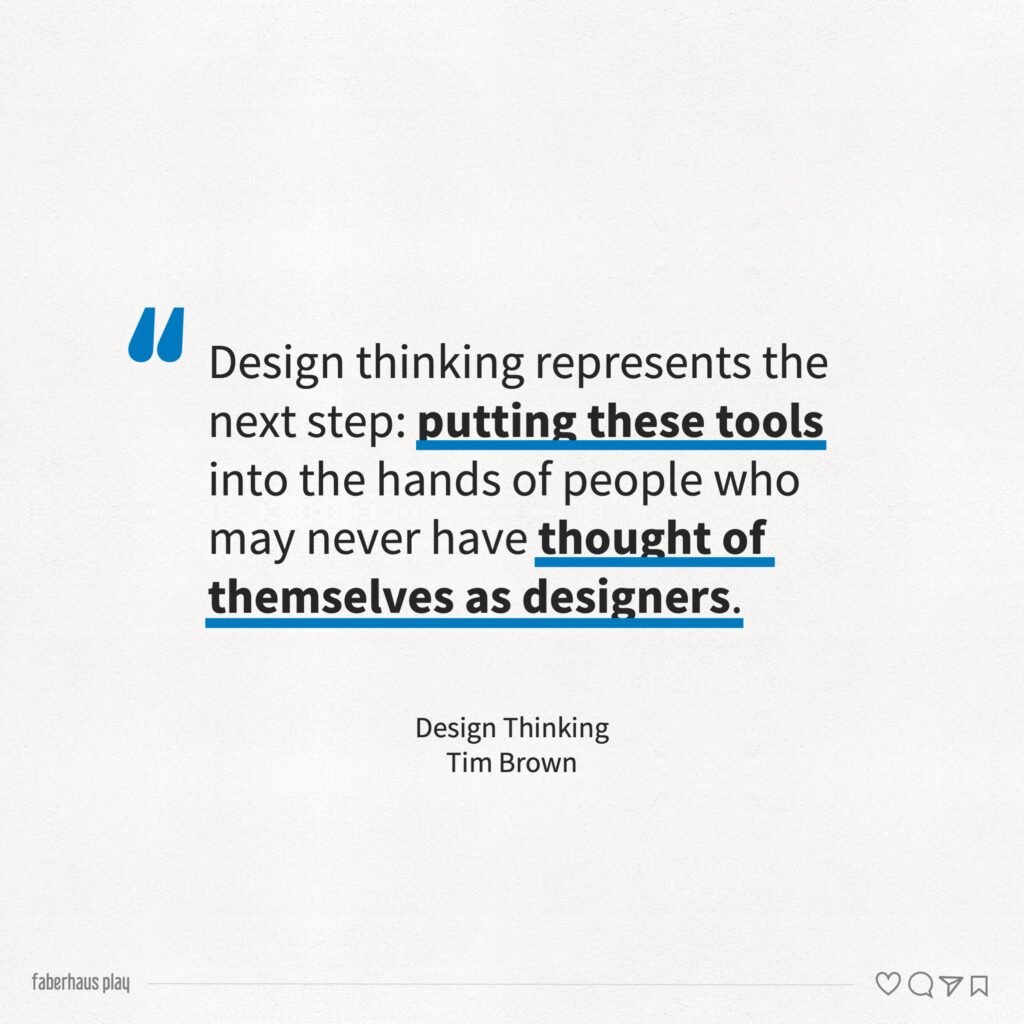
Design thinking represents the next step: putting these tools into the hands of people who may never have thought of themselves as designers.
That idea continues to shape modern product organizations.
Today, many successful teams rely on shared practices such as:
- prototyping
- experimentation
- customer research
- co-creation
- iterative learning
And this regardless of job title.
Innovation happens at the intersection
One of the concepts most associated with design thinking is the balance between three dimensions:
- desirability
- feasibility
- viability
In Brown’s words, successful innovation happens when human needs, technical possibilities, and business realities meet.
Many organizations focus too heavily on only one of these dimensions.
Technology companies often prioritize feasibility.
Corporations often prioritize viability.
Creative teams often prioritize desirability.
The challenge is creating solutions that work across all three.
This remains one of the most useful frameworks in innovation today.
Because great ideas are rarely enough.
Ideas need to be desirable, feasible, and viable simultaneously.
Human behavior matters more than opinions
One recurring theme throughout Brown’s work is observation.
He repeatedly emphasizes that people are surprisingly good at adapting to bad experiences.
They create workarounds.
They tolerate friction.
They develop habits around poorly designed systems.
And because they adapt, they often struggle to articulate their real needs. This insight remains incredibly important for UX and product teams.
Customers may tell us what they want.
But observing what they actually do often reveals something much more valuable.
As Brown argued:
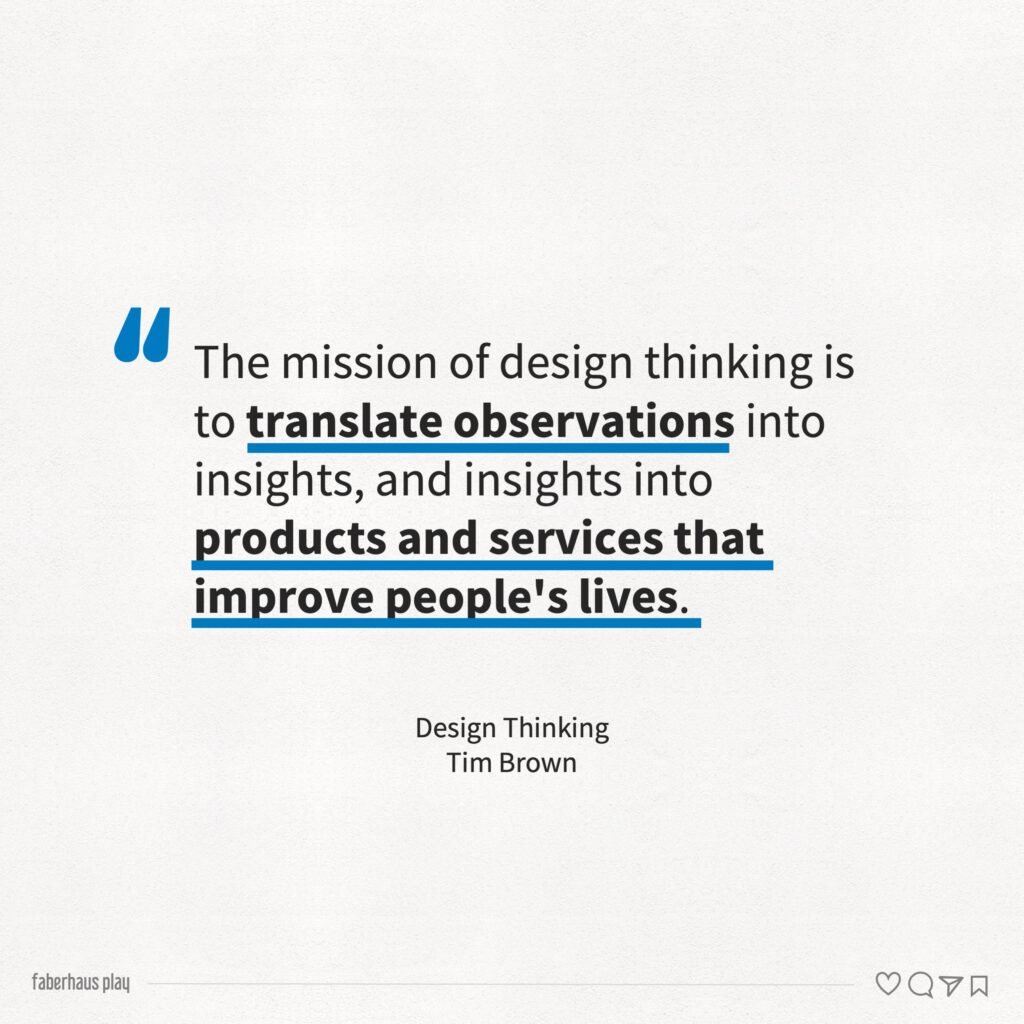
The mission of design thinking is to translate observations into insights, and insights into products and services that improve people’s lives.
That sentence alone captures much of modern UX practice.
Failure is part of the process
One of the most quoted ideas from the book is:
Fail often to succeed sooner.
At first glance, this sounds like typical innovation advice.
But Brown’s point was deeper.
The goal is not failure.
The goal is learning.
Prototypes, experiments, and pilots are valuable because they help teams learn before committing large amounts of time, money, and resources.
This mindset became foundational for:
- lean startup
- product discovery
- agile development
- experimentation cultures
But many organizations still struggle with it.
They want certainty before learning.
Design thinking suggests the opposite.
Learn first.
Then scale.
Great teams think together
Another insight that feels increasingly relevant today concerns collaboration.
Brown distinguishes multidisciplinary teams from interdisciplinary teams.
A multidisciplinary team contains different specialists.
An interdisciplinary team creates shared ownership.
That distinction is subtle but important.
In many organizations, collaboration becomes a negotiation between silos.
Design protects design.
Engineering protects engineering.
Business protects business.
Interdisciplinary teams operate differently.
People contribute expertise without becoming prisoners of their expertise.
The focus shifts from defending ideas to improving ideas.
And that’s often where breakthrough thinking emerges.
Creativity needs safety
One of the themes I appreciated most when revisiting Brown’s work is his discussion of culture.
Many organizations say they want innovation.
Far fewer create conditions where innovation can actually happen.
Brown repeatedly emphasizes:
- experimentation
- psychological safety
- permission to fail
- curiosity
- exploration
Innovation requires environments where people feel comfortable taking risks.
Not reckless risks.
Learning risks.
The challenge is that organizations often want innovation outcomes without innovation behaviors.
They want certainty and creativity at the same time.
Unfortunately, those goals are often in tension.
Prototypes are learning tools
One of the biggest misconceptions about prototyping is that prototypes exist to validate solutions.
Brown offers a more useful perspective.
A prototype exists to help us learn.
A successful prototype is not necessarily one that works perfectly.
It’s one that teaches us something valuable.
That idea transformed how many modern product teams think about experimentation.
The purpose of a prototype is not proving that we are right.
The purpose is discovering what we don’t know yet.
Why design thinking still matters
Design thinking has received criticism over the years.
Some criticism is fair.
Organizations have sometimes reduced it to:
- workshops
- sticky notes
- brainstorming sessions
- innovation theater
But that doesn’t invalidate the underlying principles.
At its core, design thinking remains a powerful reminder that innovation is fundamentally about people.
Not technology.
Not processes.
Not frameworks.
People.
The best ideas emerge when we:
- understand human needs
- remain curious
- experiment thoughtfully
- collaborate across disciplines
- stay open to learning
Those principles are just as relevant today as they were when Brown first wrote about them.
Design Thinking is above all about people
Perhaps the most enduring lesson from Tim Brown’s work is that design is not really about objects.
It’s about relationships.
The relationship between:
- people and products
- people and services
- people and systems
- people and other people
Technology will continue to evolve.
Tools will change.
Frameworks will come and go.
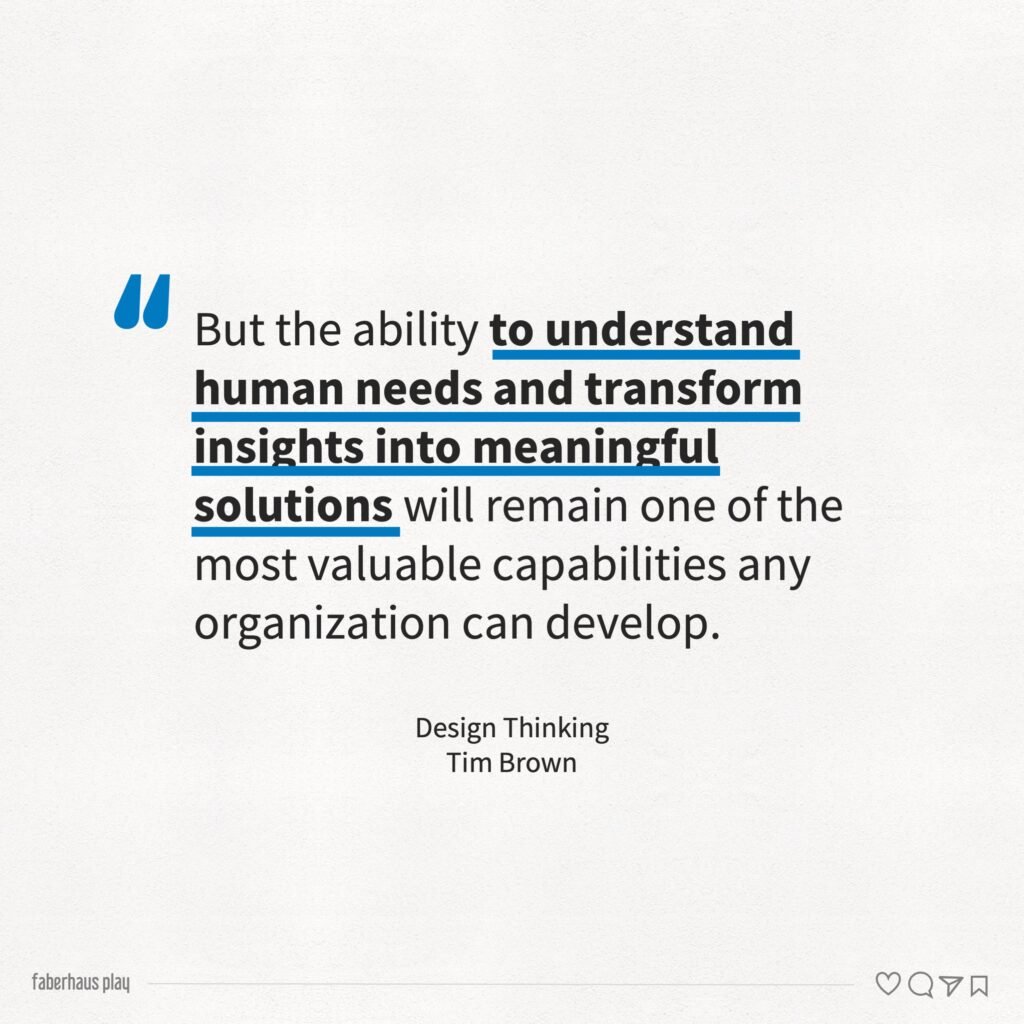
But the ability to understand human needs and transform insights into meaningful solutions will remain one of the most valuable capabilities any organization can develop.
That is what design thinking was really trying to teach us all along.
References
Tim Brown. (2009). Change by Design: How Design Thinking Creates New Alternatives for Business and Society. New York: Harper Business.