A design audit can change everything.
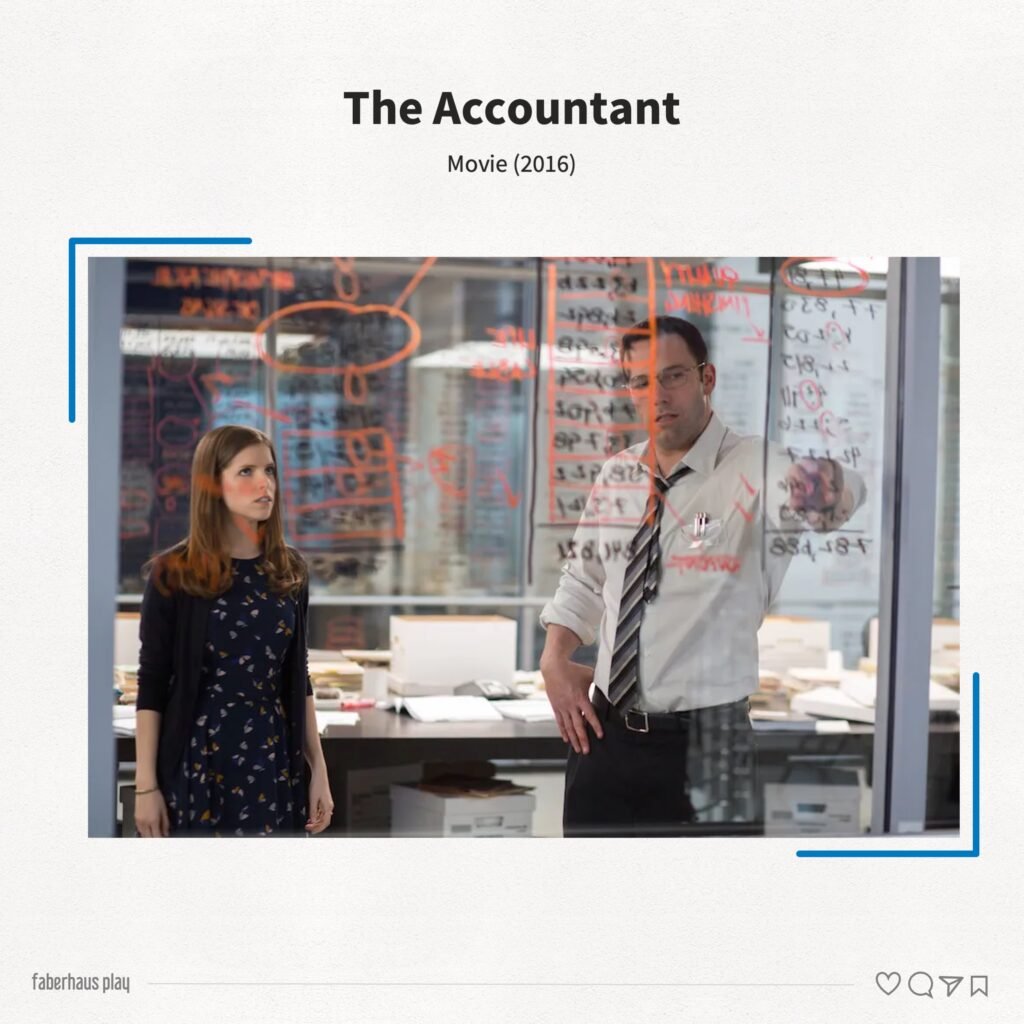
In The Accountant (2016), the story begins when an employee notices that a few financial records don’t add up.
That small inconsistency triggers an investigation spanning years of transactions, eventually uncovering a much larger pattern hidden beneath the surface.

Design audits often begin the same way.
A recurring customer complaint.
A drop in conversion.
A user journey generating an unusual number of support requests.
A component recreated by different teams over and over again.
Individually, these may seem like isolated issues.
Together, they often point to a much deeper problem.
The most immediate reaction is usually to fix each symptom.
Move a button.
Reorganize the navigation.
Rewrite an error message.
Add another confirmation step.
A design audit requires a different mindset.
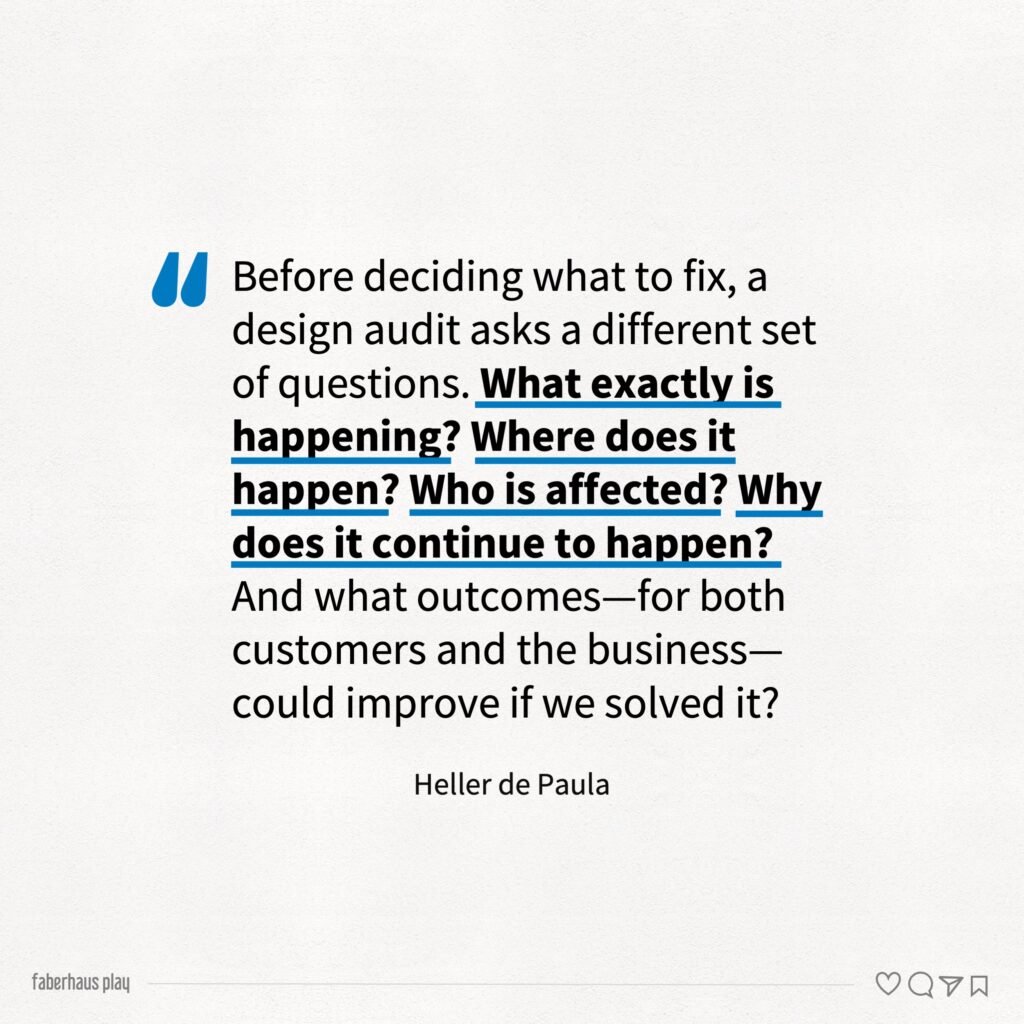
Before deciding what to fix, a design audit asks a different set of questions.
What exactly is happening?
Where does it happen?
Who is affected?
Why does it continue to happen?
And what outcomes—for both customers and the business—could improve if we solved it?
That shift transforms a design audit from an interface review into a strategic product practice.
What is a design audit, and what is its purpose?
A design audit is a structured evaluation of the current state of a product, service, or design organization.
Its purpose is to identify errors, inconsistencies, risks, and opportunities, connect them to customer and business outcomes, and turn those findings into clear priorities for action.
Depending on the question being investigated, a design audit may evaluate multiple layers of a product, including:
- Interface quality and visual consistency
- Usability and accessibility
- Content strategy and information architecture
- Cross-channel customer journeys
- Design systems
- Research and product development practices
- Collaboration between Design, Product, and Engineering
- Metrics and performance measurement
- Design’s participation in strategic decision-making
The scope always depends on the question that initiated the audit.
A checkout audit is very different from a design system audit.
A product audit is different from assessing the maturity of a Design organization.
But every successful audit has one thing in common:
It ends with a decision.
If the outcome is simply a list of issues, you’ve created an inventory.
If it connects evidence, causes, business impact, customer impact, and priorities, you’ve created a design audit.
When is the right time to conduct a design audit?
Comprehensive audits require time.
They involve multiple stakeholders.
And they often uncover more opportunities than an organization can realistically address at once.
For that reason, they shouldn’t be conducted simply because they sound like a good practice.
They are particularly valuable when:
- Customer complaints become more frequent or repetitive.
- There are signs of revenue loss or unnecessary operational costs.
- A key business metric declines—or stops improving—without a clear explanation.
- A critical customer journey accumulates one temporary fix after another.
- A major redesign is being planned.
- Multiple products need to be unified into a more consistent experience.
- The design system has gradually lost consistency.
- Design and Engineering are experiencing excessive rework.
- The product has grown faster than its underlying foundations.
- New leadership needs a clear picture of the current state.
- The organization is preparing its annual planning cycle.
- Significant market, strategic, or technological changes require reassessing the product.
Before launching a design audit, three conditions should already exist:
- A clear question—or strategic decision—the audit is expected to support.
- Sufficient access to evidence, data, and the people involved.
- A group of decision-makers capable of reviewing, prioritizing, and acting on the findings.
And one final reminder.
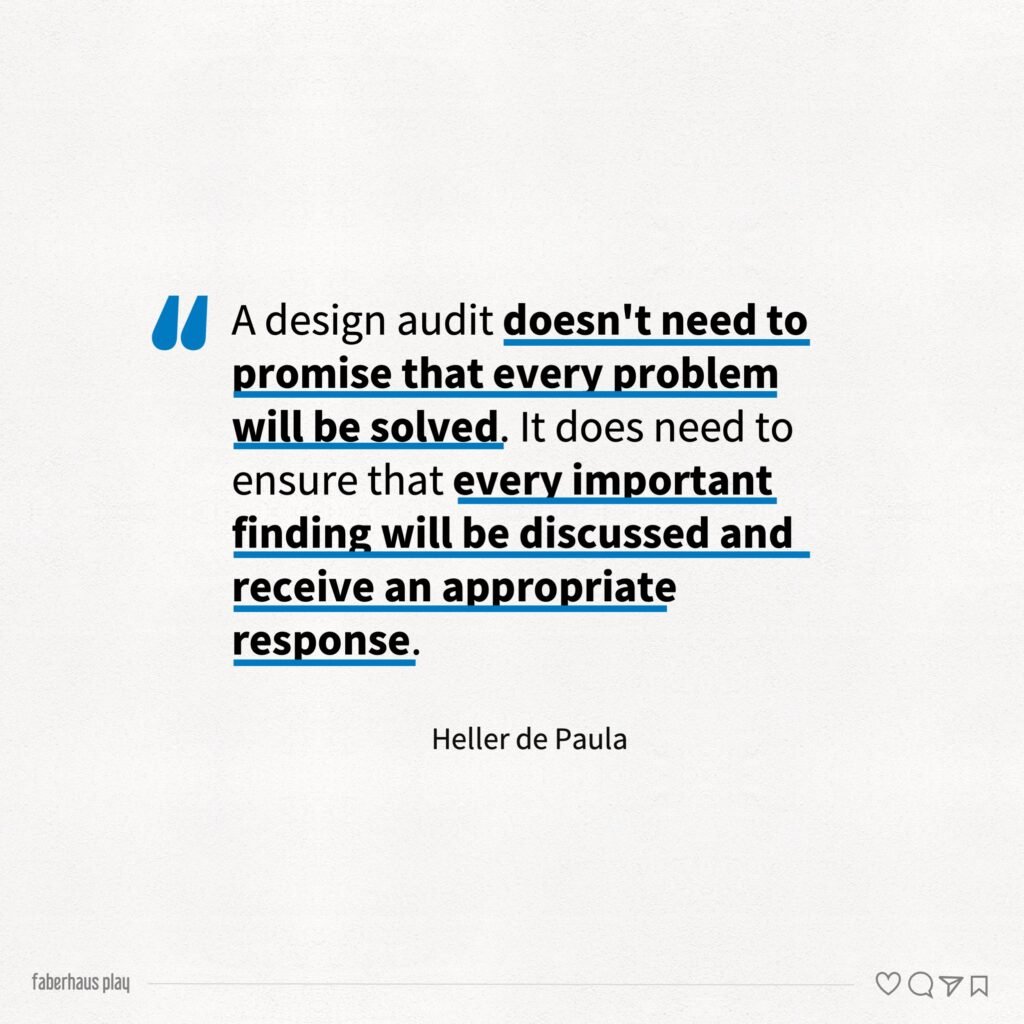
A design audit doesn’t need to promise that every problem will be solved.
It does need to ensure that every important finding will be discussed and receive an appropriate response.
Without that commitment, an audit becomes documentation instead of a catalyst for better decisions.
Deep audits or continuous observation?
A design audit doesn’t have to become a massive project repeated every month.
In practice, the healthiest organizations combine two complementary rhythms.
Continuous monitoring
A lightweight, ongoing process can track signals such as:
- App Store and Google Play reviews
- Customer support conversations
- Product incidents and technical errors
- Metrics from critical customer journeys
- Accessibility issues
- Design system deviations
- Research findings
- Signals coming from Product, Sales, Customer Experience, and Engineering
Together, these inputs create a shared repository of problems, patterns, and opportunities.
Focused audits
At strategic moments, organizations select a specific topic and conduct a deeper investigation with a defined scope, timeline, team, and expected deliverables.
For example:
- A quarterly audit of a high-priority customer journey
- A semiannual review of the design system
- An annual assessment of organizational design maturity
- A product performance audit focused on financial bottlenecks
- A targeted audit triggered by recurring customer complaints, a major redesign, or a strategic shift
This balance allows teams to continue building new capabilities without waiting for existing problems to become full-scale crises.
A practical framework for running a design audit
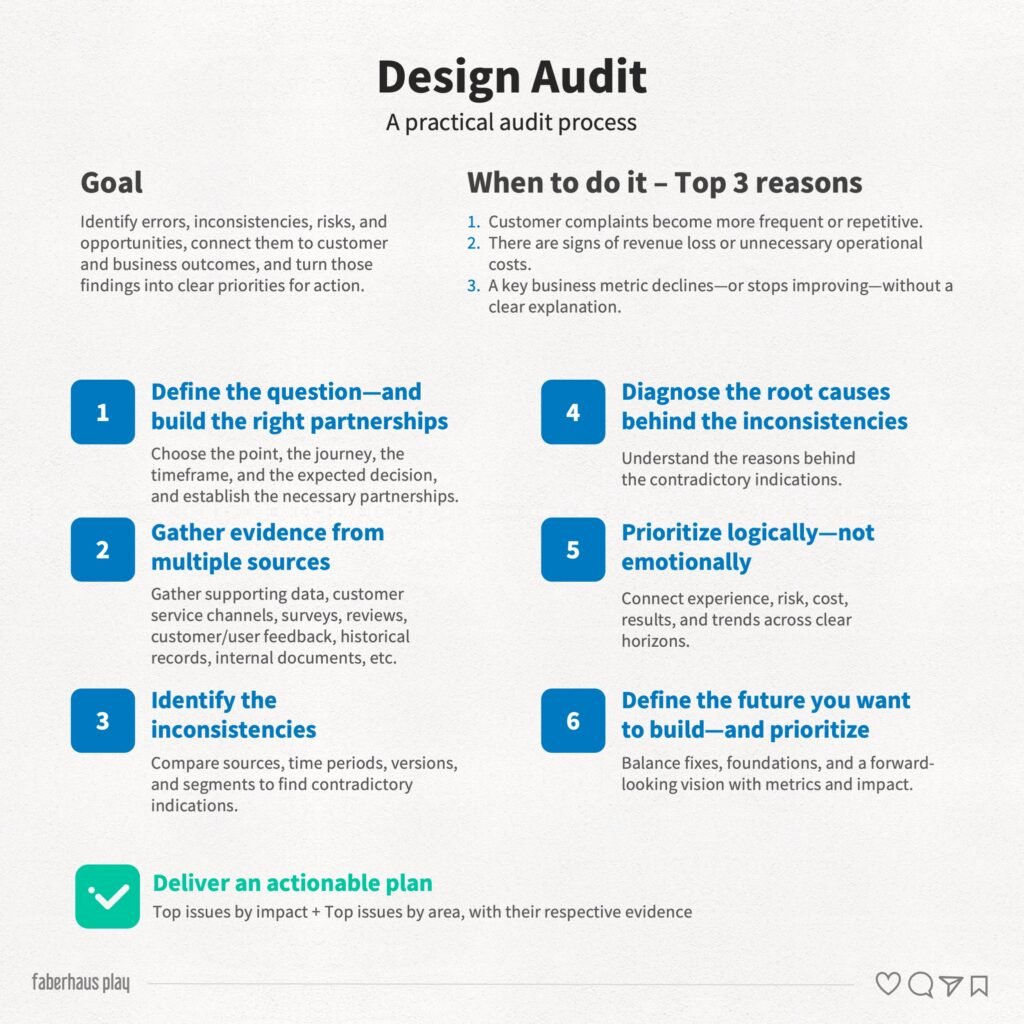
1. Define the question—and build the right partnerships
Avoid starting with:
“Let’s find everything that’s wrong.”
Instead, begin with a question that clearly defines the scope of the investigation.
For example:
- Why are so many users abandoning the onboarding process?
- Why is Customer Support receiving so many delivery-related inquiries?
- Where is product inconsistency creating the most rework?
- Is our design system actually helping teams move faster?
- Which problems have the greatest impact on customer trust and retention?
- Where are the biggest financial bottlenecks across our products today?
Once the question is clear, define the boundaries of the audit:
- Which product or journey will be evaluated?
- Who is affected?
- What time period will be analyzed?
- Who is responsible for the audit?
- What is the expected timeline?
- What decision should this audit support?
Just as important as defining the scope is establishing the right partnerships.
Secure sponsorship from someone with enough influence—such as a Head of Design, Director of Product, or another executive leader—who can help remove organizational barriers and support the work throughout the process.
At the same time, build relationships with the people who own the data, systems, and customer insights you’ll need. Waiting until the end to involve them often creates unnecessary resistance and slows the audit down.
Share your findings as the investigation progresses instead of waiting until the final presentation.
Invite discussion.
Listen carefully.
Be willing to adjust your interpretation when new evidence emerges.
A design audit shouldn’t feel like a surprise inspection.
It should feel like a collaborative investigation.
After all…
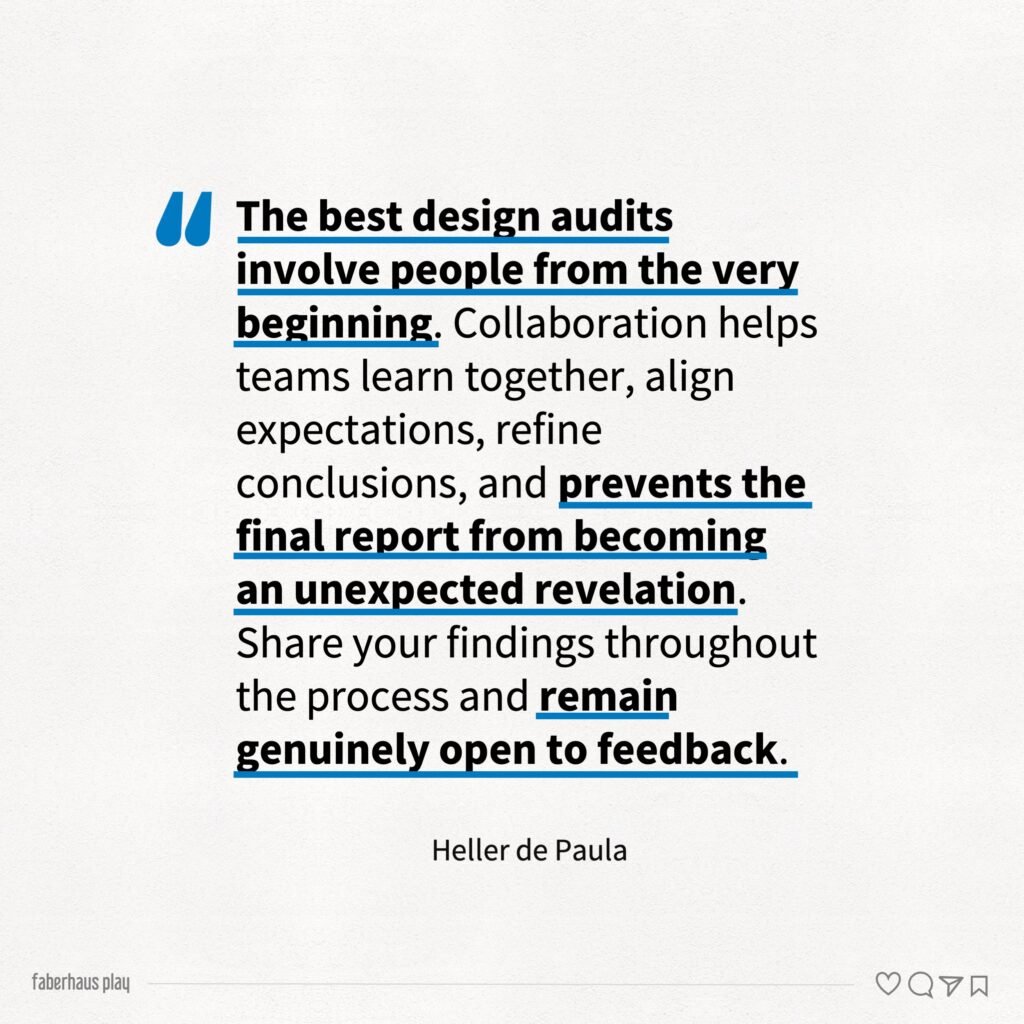
The best design audits involve people from the very beginning.
Collaboration helps teams learn together, align expectations, refine conclusions, and prevents the final report from becoming an unexpected revelation.
Share your findings throughout the process and remain genuinely open to feedback.
The more stakeholders contribute along the way, the stronger—and more actionable—the final recommendations become.
2. Gather evidence from multiple sources
Don’t start with the interface alone.
Some of the strongest evidence appears only after the experience has already happened.
Look across multiple sources, including:
- Customer support conversations and transcripts
- Reasons for cancellations
- Reviews on App Store, Google Play, and other digital marketplaces
- Qualitative research
- Customer satisfaction surveys
- Behavioral analytics
- Technical incidents and errors
- Usability testing
- Public complaints
- Returns, cancellations, and refunds
- Previous documentation and product decisions
- Existing components and design patterns
- Interviews with internal teams
Each source tells a different part of the story.
Customer support reveals language, frustration, and context.
Analytics shows scale and behavioral patterns.
Research uncovers motivations, expectations, and unmet needs.
No single source provides the whole picture.
A meaningful audit emerges when multiple sources begin pointing toward the same underlying problem.
3. Identify the inconsistencies
A recent complaint may simply be the result of a new release.
Another issue may have existed for years, surviving dozens of product iterations.
That’s why comparison is essential.
Review multiple time periods, such as:
- The last 7 days
- The last 30 days
- The previous 30–180 days
- Earlier periods whenever necessary
Looking across different windows helps distinguish between:
- One-time incidents
- Recurring problems
- Growing trends
- Seasonal patterns
- Issues that never truly disappeared
- Fixes that addressed symptoms rather than root causes
The audit period shouldn’t be treated merely as a reporting range.
It should become a tool for comparison.
Compare as many perspectives as necessary to reveal inconsistencies that would otherwise remain hidden.
4. Diagnose the root causes behind the inconsistencies
When you’re working with evidence from multiple sources, resist the temptation to jump straight to conclusions.
Instead, organize the information into smaller diagnostic reports before creating the final synthesis.
For example:
- The most common themes emerging from Customer Support
- The highest-rated usability issues reported by customers
- The largest drop-off points in critical funnels
- Patterns identified through user research
- Design system inconsistencies
- Previous decisions related to the problem being investigated
These mini-diagnoses preserve the context behind each finding and prevent the audit from becoming nothing more than a collection of screenshots, opinions, and disconnected observations.
A well-documented finding can follow a structure like this:
- Finding: Customers who purchase as guests cannot track their orders afterward.
- Evidence: Increased support requests, abandonment on the login screen, and multiple reports from customers attempting to create an account after completing a purchase.
- Likely cause: Orders placed as guests are not automatically associated with accounts created later.
- Customer impact: Anxiety, uncertainty, and difficulty tracking deliveries.
- Business impact: Higher support costs, reduced customer trust, and an increased risk of cancellations.
- Confidence level: High, supported by behavioral analytics and consistent customer feedback.
Notice that the value of the finding isn’t simply identifying the problem.
It’s connecting evidence, causes, customer impact, and business outcomes into a coherent narrative that supports decision-making.
5. Prioritize logically—not emotionally
The most talked-about problem isn’t always the most important.
The most frequent issue isn’t always the most severe.
And the most visible problem isn’t always the one causing the greatest business impact.
A good design audit evaluates findings across multiple dimensions.
Consider assessing each finding according to factors such as:
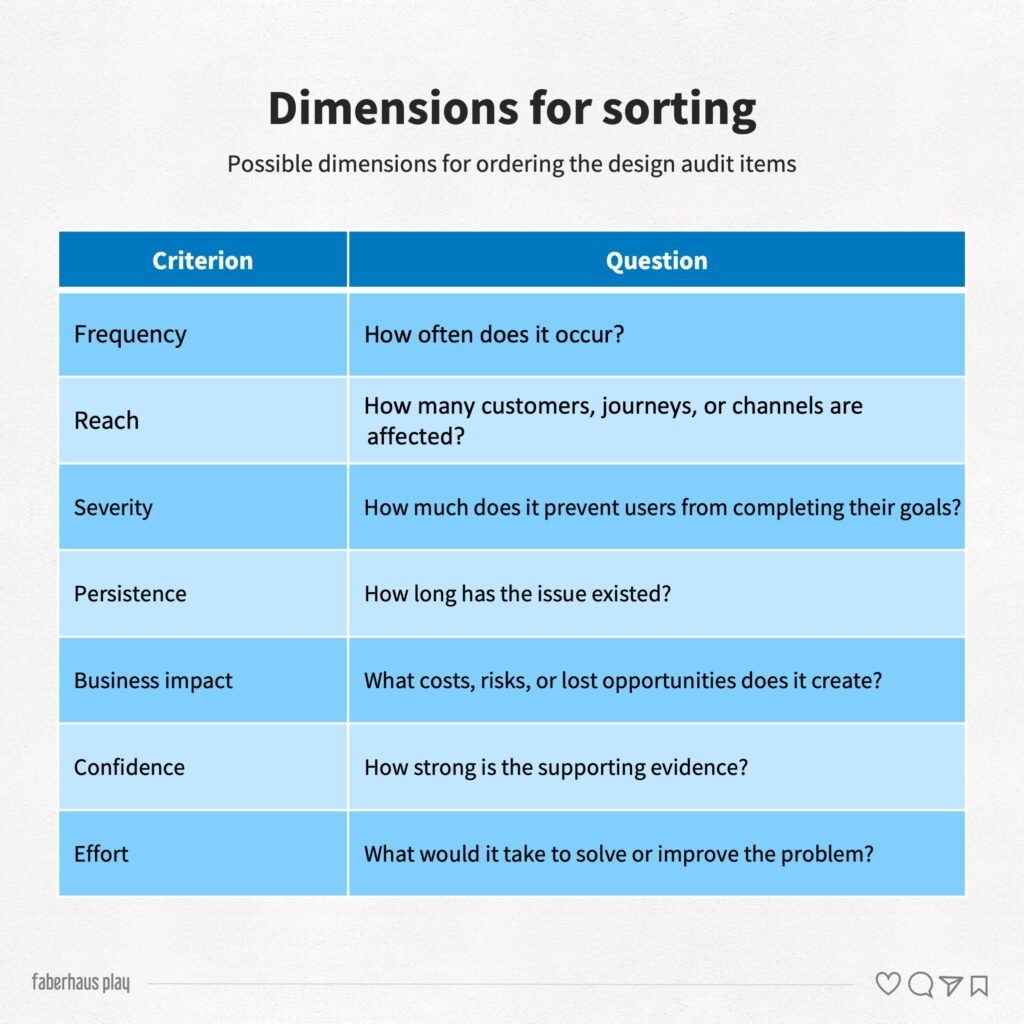
- Frequency: How often does it occur?
- Reach: How many customers, journeys, or channels are affected?
- Severity: How much does it prevent users from completing their goals?
- Persistence: How long has the issue existed?
- Business impact: What costs, risks, or lost opportunities does it create?
- Confidence: How strong is the supporting evidence?
- Effort: What would it take to solve or improve the problem?
Whenever possible, translate percentages into numbers that people can immediately understand.
“2% of users” may sound insignificant.
“Forty thousand customers affected every month” creates a completely different conversation.
Business impact shouldn’t be measured only in terms of revenue.
However, connecting findings to financial outcomes often helps organizations prioritize more effectively.
Impact may also include:
- Conversion
- Product adoption
- Customer retention
- Customer support costs
- Time required to complete key tasks
- Rework
- Legal or compliance risks
- Brand reputation
- Accessibility
- Customer trust
- Customer satisfaction
Finally, remember that a design audit doesn’t need to include every issue it uncovers.
Trying to solve everything usually results in solving nothing.
A more practical approach is to create focused priority lists.
For example:
- The Top 10 product issues, ranked by business impact, customer complaints, and the number of affected interfaces.
- The Top 4 priorities for each discipline—such as Product, User Experience, User Interface, and Engineering.
The objective isn’t to produce the longest report.
It’s to produce the clearest roadmap.
6. Define the future you want to build—and prioritize
One of the biggest risks of a design audit is that it can consume all of a team’s energy looking backward.
The product starts to feel like a house full of defects, and the roadmap becomes an endless queue of repairs.
To avoid that trap, separate the audit into two complementary movements.
Movement 1: Understand the house you have today
Start by investigating the current state of the product.
Ask questions like:
- Where are the most critical issues?
- Which fixes have only treated symptoms?
- What past decisions led to these outcomes?
- Which limitations keep appearing?
- What capabilities are missing?
The objective isn’t to assign blame.
It’s to understand the system that continues to produce these problems.
Movement 2: Imagine the house you want tomorrow
Once you’ve completed the diagnosis, deliberately shift your perspective.
Temporarily set aside today’s constraints and ask a different kind of question:
What if?
AJ, Head of Product Design and founder of Design Circuit, refers to this exercise as Blue Sky thinking—creating space to imagine possibilities before discussing feasibility.
For example:
- What if this step didn’t need to exist?
- What if the customer journey wasn’t organized around our internal processes?
- What if users never had to create an account?
- What if Customer Support and the product became a single seamless experience?
- What if we rebuilt this service from scratch?
- What if we suddenly had to support ten times more customers?
The first movement reveals what needs to change.
The second prevents the team from limiting its ambition to simply fixing today’s problems.
It also creates a shared vision for what the product could become.
As with every stage of the audit, involve stakeholders throughout the process.
Share emerging ideas.
Invite alternative perspectives.
Ask what might be missing from the future vision.
The most valuable opportunities often emerge when Product, Design, Engineering, Customer Experience, and leadership imagine that future together.
At the same time, be selective.
Not every ambitious idea belongs in the final report.
A focused set of three to seven strategic opportunities is usually enough to establish a clear direction while keeping the roadmap realistic.
More importantly, make your prioritization criteria explicit.
That transparency reduces future confusion and helps stakeholders understand why certain opportunities were chosen over others.
7. Deliver an actionable plan
The results of a design audit shouldn’t automatically consume the entire product roadmap.
One practical way to balance improvements with innovation is to organize initiatives across three time horizons.
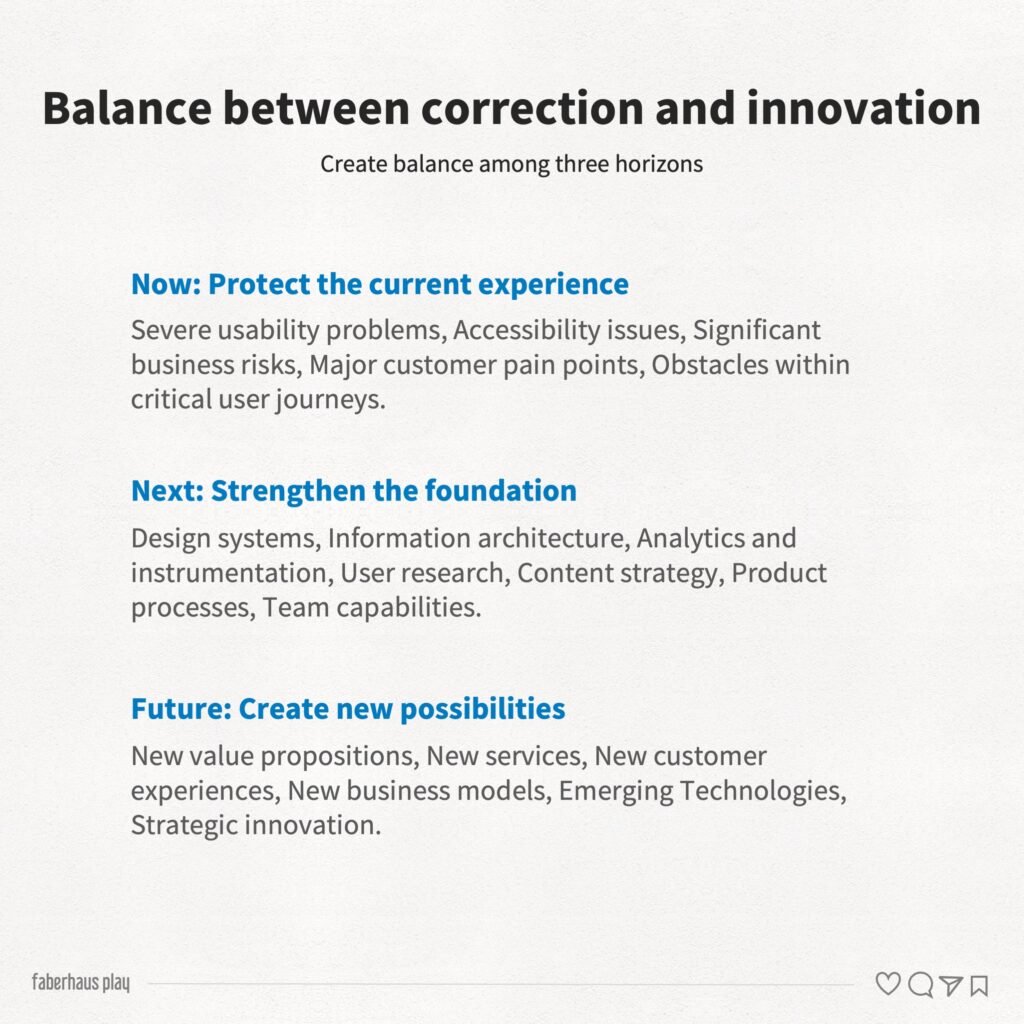
Now: Protect the current experience
Focus on critical issues that require immediate attention, including:
- Severe usability problems
- Accessibility issues
- Significant business risks
- Major customer pain points
- Obstacles within critical user journeys
Next: Strengthen the foundation
Invest in improvements that reduce recurring problems over time, such as:
- Design systems
- Information architecture
- Analytics and instrumentation
- User research
- Content strategy
- Product processes
- Team capabilities
These investments don’t always create visible customer features, but they make future product development faster, more consistent, and more sustainable.
Future: Create new possibilities
Reserve space for initiatives that expand what the product can become.
This may include:
- New value propositions
- New services
- New customer experiences
- New business models
- Emerging technologies
- Strategic innovation
The balance between these three horizons depends entirely on the product’s current situation.
A product experiencing serious usability or operational issues should naturally invest more heavily in protecting today’s experience.
A mature, healthy product can dedicate more attention to long-term innovation.
The important thing is making these trade-offs explicit.
Trying to fix everything often prevents meaningful innovation.
Ignoring foundational problems while building new features simply increases product debt.
Strategy is the discipline of balancing both realities.
Each priority included in the final report should also be actionable.
A useful structure might look like this:
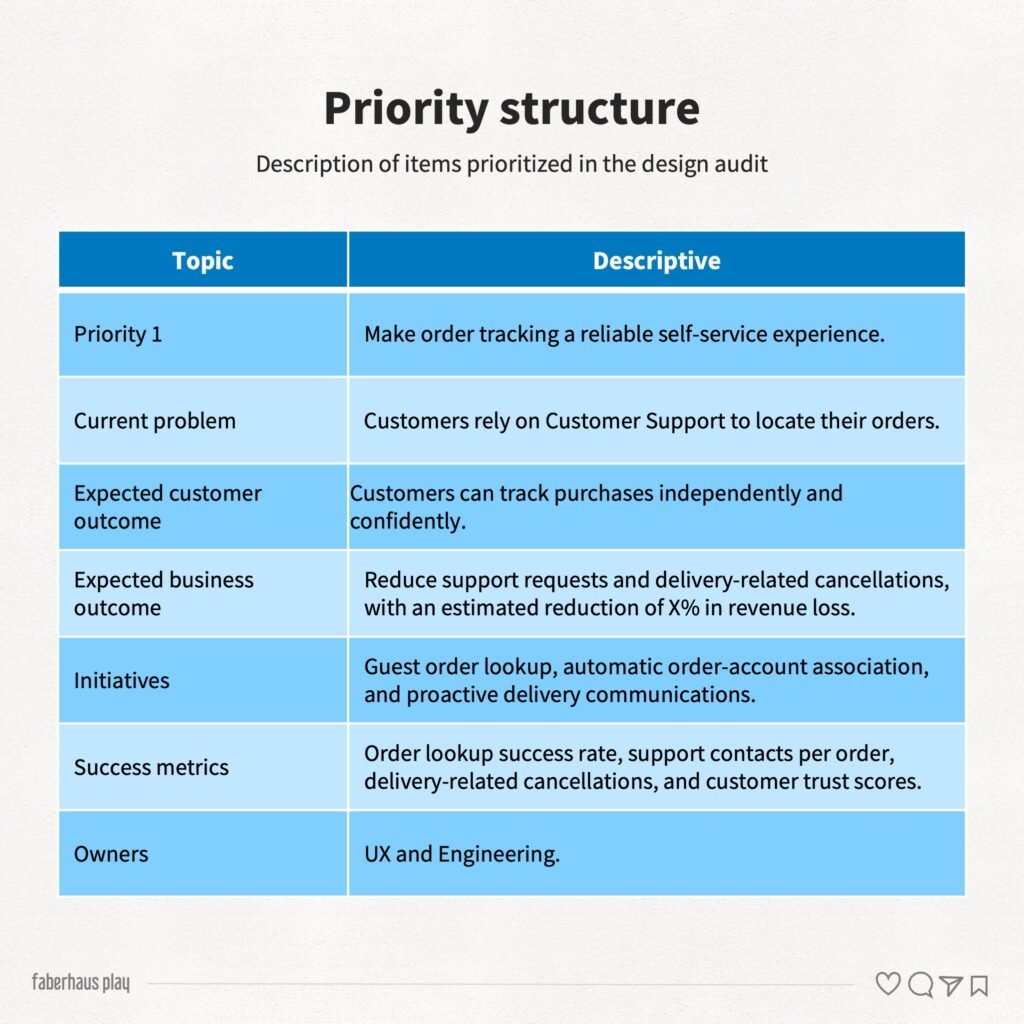
- Priority 1: Make order tracking a reliable self-service experience.
- Current problem: Customers rely on Customer Support to locate their orders.
- Expected customer outcome: Customers can track purchases independently and confidently.
- Expected business outcome: Reduce support requests and delivery-related cancellations, with an estimated reduction of X% in revenue loss.
- Initiatives: Guest order lookup, automatic order-account association, and proactive delivery communications.
- Success metrics: Order lookup success rate, support contacts per order, delivery-related cancellations, and customer trust scores.
- Owners: UX and Engineering.
Notice that the plan doesn’t begin with features.
It begins with the outcomes the organization wants to achieve.
That’s what makes a design audit a strategic tool rather than simply another backlog of improvements.
The right question to ask
A design audit isn’t about finding flaws to prove that a product is failing.
It’s about creating the space to see what the speed of day-to-day operations has made invisible.
A good audit connects scattered signals.
It reveals the true scale of problems.
It uncovers their root causes.
And it helps organizations consciously decide what to fix, what to strengthen, and what to create next.
The most important question is not:
“How many problems did we find?”
It’s this:
What did we learn about our product, and what better decisions can we make to make it stronger, healthier, and more resilient?
References
Moultrie, J.; Clarkson, P. J.; Probert, D. (2007). Development of a Design Audit Tool for SMEs. Journal of Product Innovation Management, 24(4), 335–368. The paper presents an audit tool that combines product, process, and management.
Topaloğlu, F.; Er, Ö. (2017). Discussing a New Direction for Design Management through a New Design Management Audit Framework. The Design Journal, 20(sup1), S502–S521. Expands the audit to include strategy, integration, research, culture, and organizational development.
Hands, D.; Ingram, J.; Jerrard, R. (2002). Design Management Case Studies. Routledge. It presents procedures, methods, and audit cases regarding design management.
Jerrard, R.; Hands, D. (eds.) (2008). Design Management: Exploring Fieldwork and Applications. Routledge. It discusses the assessment of design value by combining qualitative and quantitative methods.
Borja de Mozota, B. (2003). Design Management: Using Design to Build Brand Value and Corporate Innovation. Allworth Press. Offers a foundation for linking design, management, innovation, and business value.
Sheppard, B. et al. (2018). The Business Value of Design. McKinsey & Company. It links practices regarding design, leadership, metrics, holistic experience, and business performance.
Apparicio Junior — AJ. Canal DC 2.0, da Design Circuit. The open class on product design auditing presents the investigation, temporal comparison, Big Thinking, and Blue Sky exercises mentioned in this article.
Faberhaus Play – Terms in business. Explains important business terms that can cause confusion.