
A few months ago, I started a simple habit.
Whenever I came across an interesting Product Design job posting, I didn’t just decide whether to apply.
I analyzed it.
I wanted to answer a much bigger question:
What do companies actually expect from Product Designers today?
After reviewing around 50 job descriptions from fintechs, banks, SaaS companies, consulting firms, Big Techs, healthcare companies, e-commerce businesses, and both startups and global enterprises, I began noticing a remarkably consistent pattern.
Designing interfaces is no longer enough
If I had conducted the same analysis five years ago, the most common requirements would probably have looked like this:
- UI Design
- Wireframing
- Prototyping
- Design Thinking
- Design Systems
- Figma
These skills are still important.
But they are no longer what makes someone stand out.
Today, they are largely considered the baseline.
The conversation has shifted well beyond interface design.
Here are the six strongest patterns that consistently appeared across the job descriptions I analyzed.
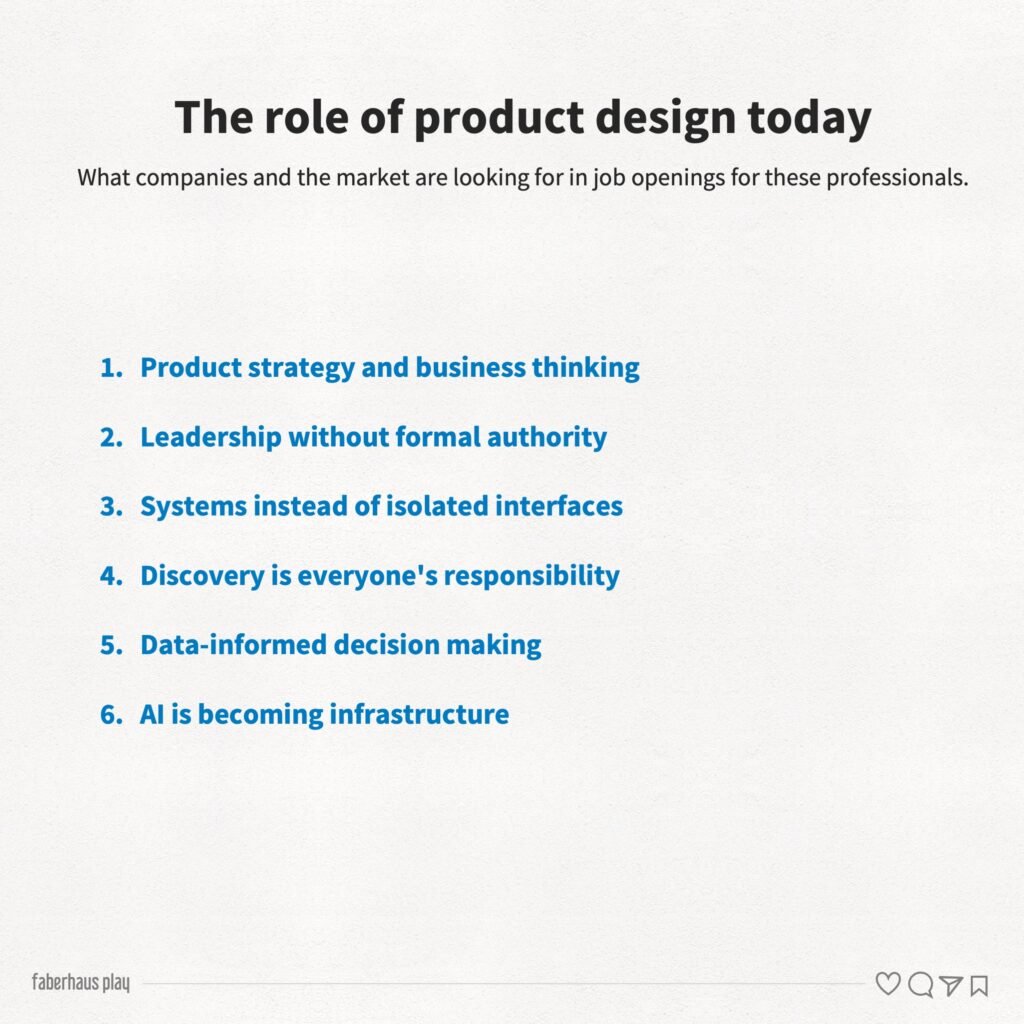
1. Product strategy and business thinking
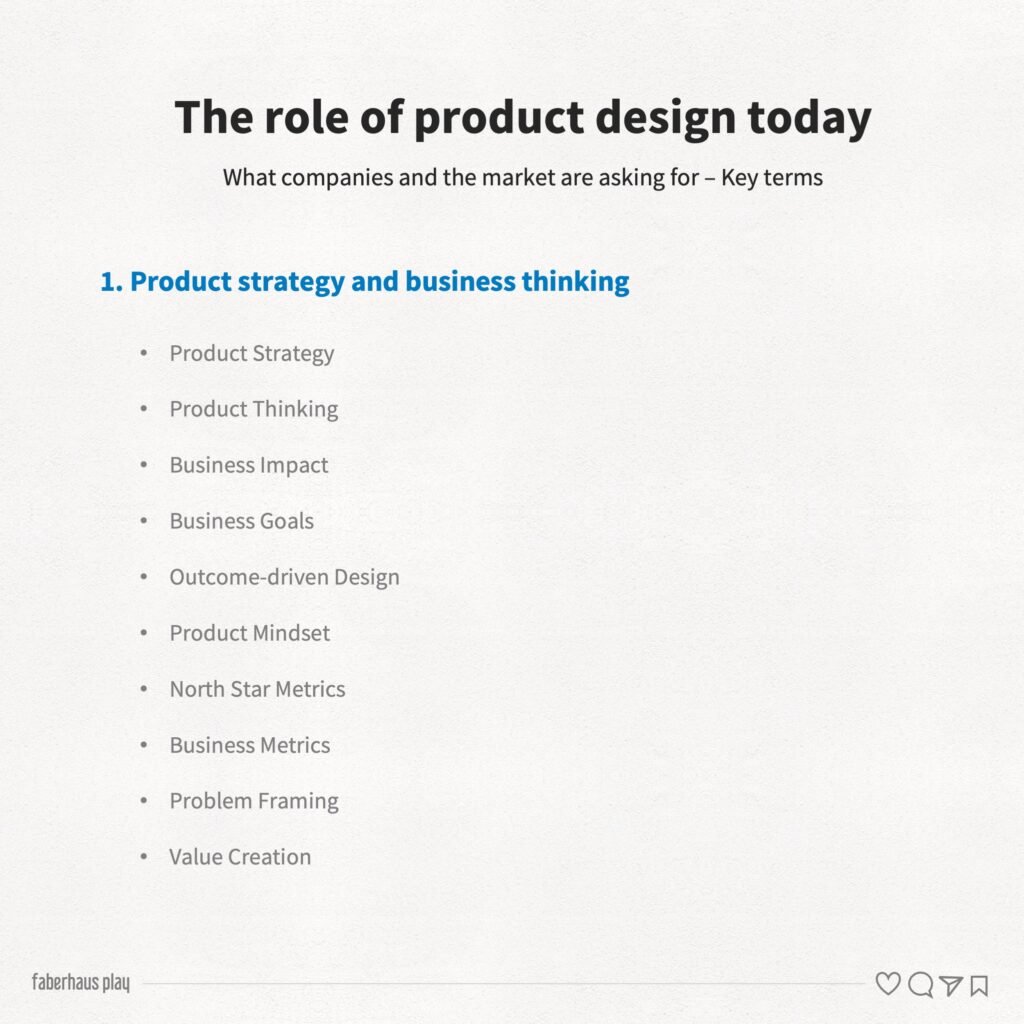
This was, by far, the strongest trend.
Companies used different terminology, but the underlying expectation was remarkably consistent.
Examples included:
- Product Strategy
- Product Thinking
- Business Impact
- Business Goals
- Outcome-driven Design
- Product Mindset
- North Star Metrics
- Business Metrics
- Problem Framing
- Value Creation
Notice something interesting.
Very few of these terms relate directly to interfaces.
Instead, they focus on understanding the business behind the product.
The question is no longer:
“Can you design a great solution?”
It has become:
“Can you identify the right problem to solve?”
Product Designers are increasingly participating in defining products—not simply designing them.
2. Leadership without formal authority
Another clear pattern surprised me.
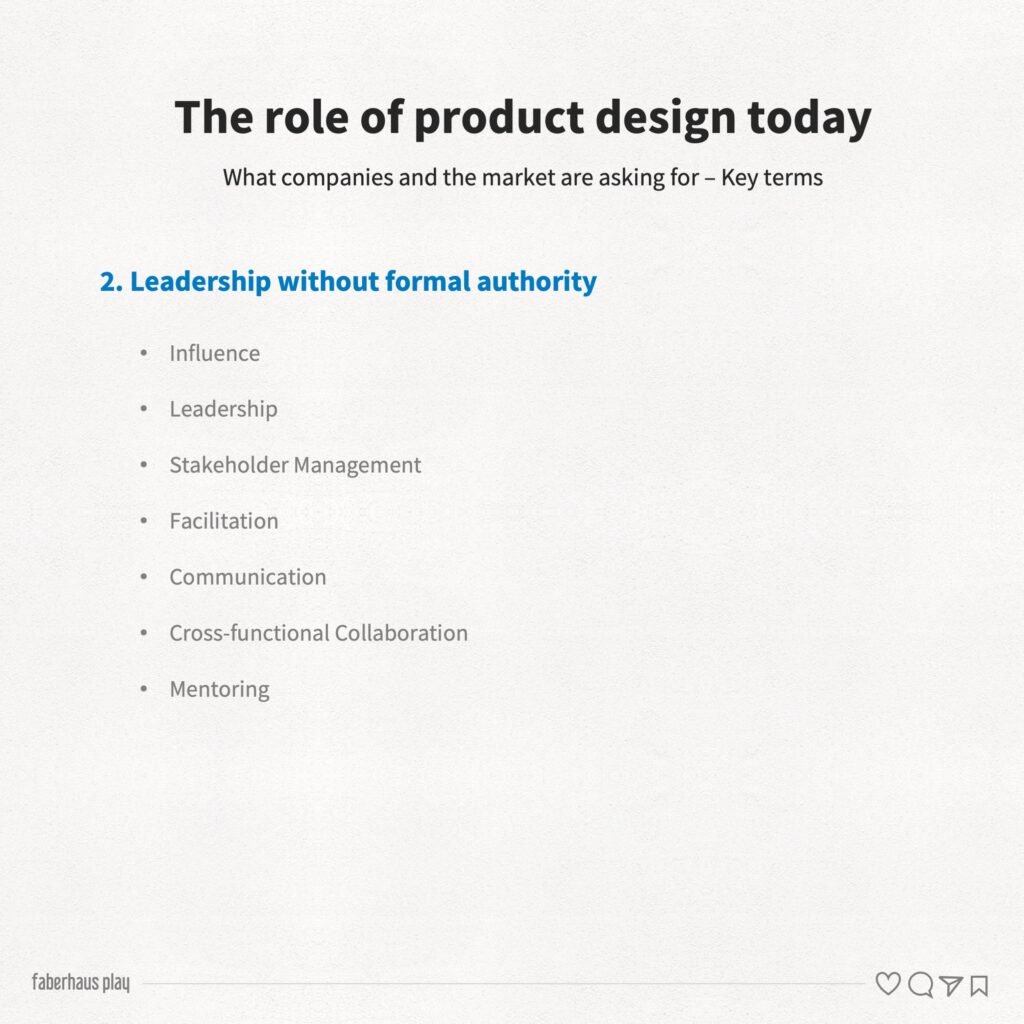
Even individual contributor roles frequently requested skills such as:
- Influence
- Leadership
- Stakeholder Management
- Facilitation
- Communication
- Cross-functional Collaboration
- Mentoring
This reflects an important shift.
For many years, seniority was measured primarily by execution.
Today, it is increasingly measured by influence.
Companies are looking for professionals capable of connecting Product, Engineering, Design, Research, and Business to help better decisions happen.
Leadership is becoming less about managing people and more about creating alignment.
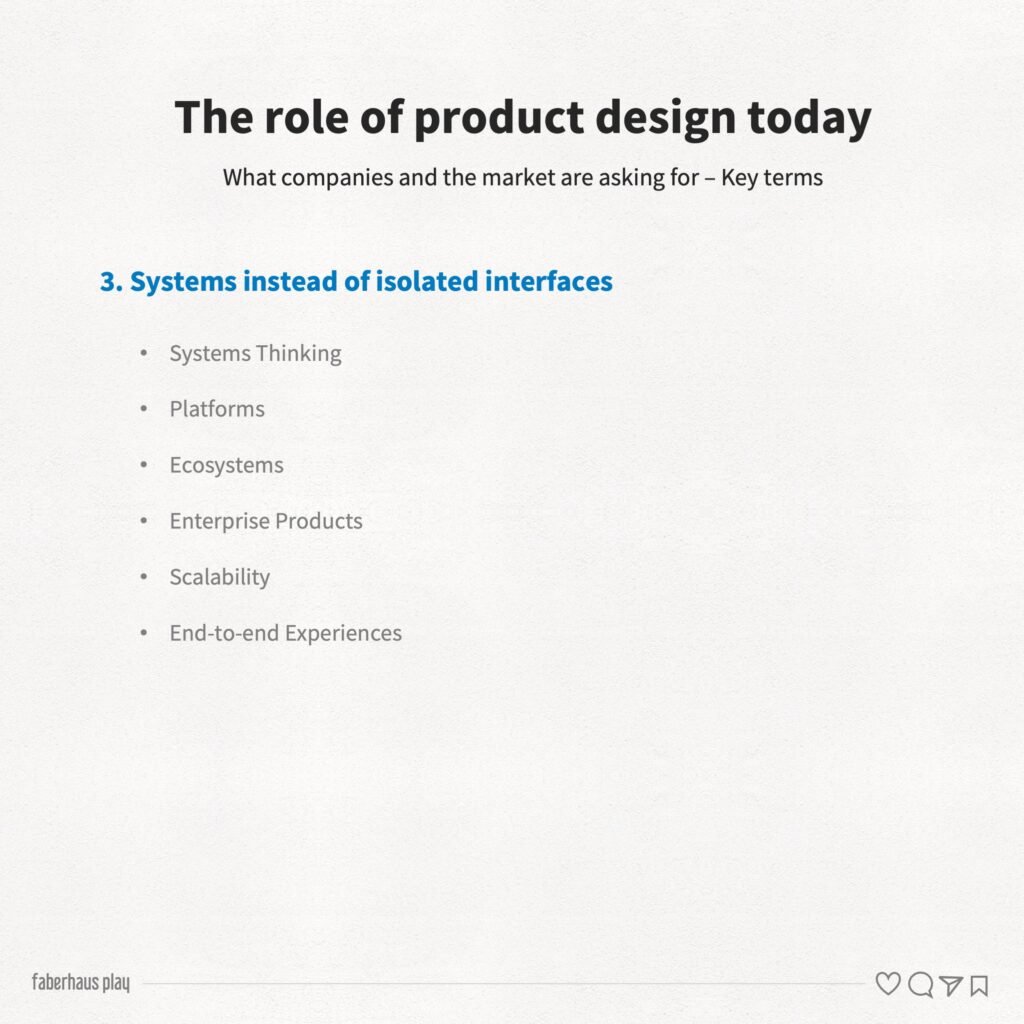
3. Systems instead of isolated interfaces
Another recurring theme involved scale.
Companies consistently mentioned concepts such as:
- Systems Thinking
- Platforms
- Ecosystems
- Enterprise Products
- Scalability
- End-to-end Experiences
The challenge is no longer designing individual screens.
It is understanding how multiple products, services, teams, and customer journeys interact as a connected ecosystem.
Modern Product Design has become increasingly systemic.
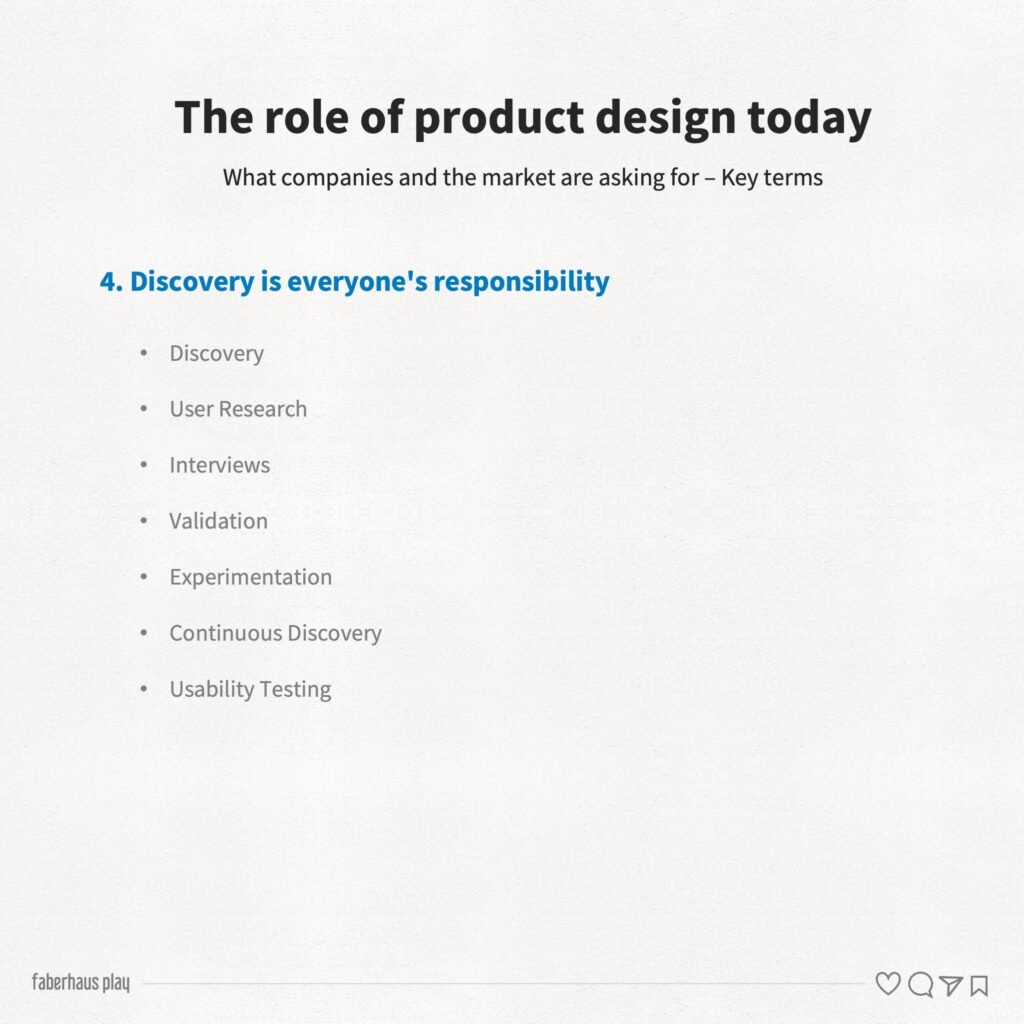
4. Discovery is everyone’s responsibility
There was a time when research and design were often separated into different roles.
That distinction is gradually disappearing.
Many companies now expect Product Designers to participate directly in:
- Discovery
- User Research
- Interviews
- Validation
- Experimentation
- Continuous Discovery
- Usability Testing
Research remains highly valued.
The difference is that it is no longer seen as the responsibility of a specialized team alone.
Discovery has become part of everyday Product Design work.
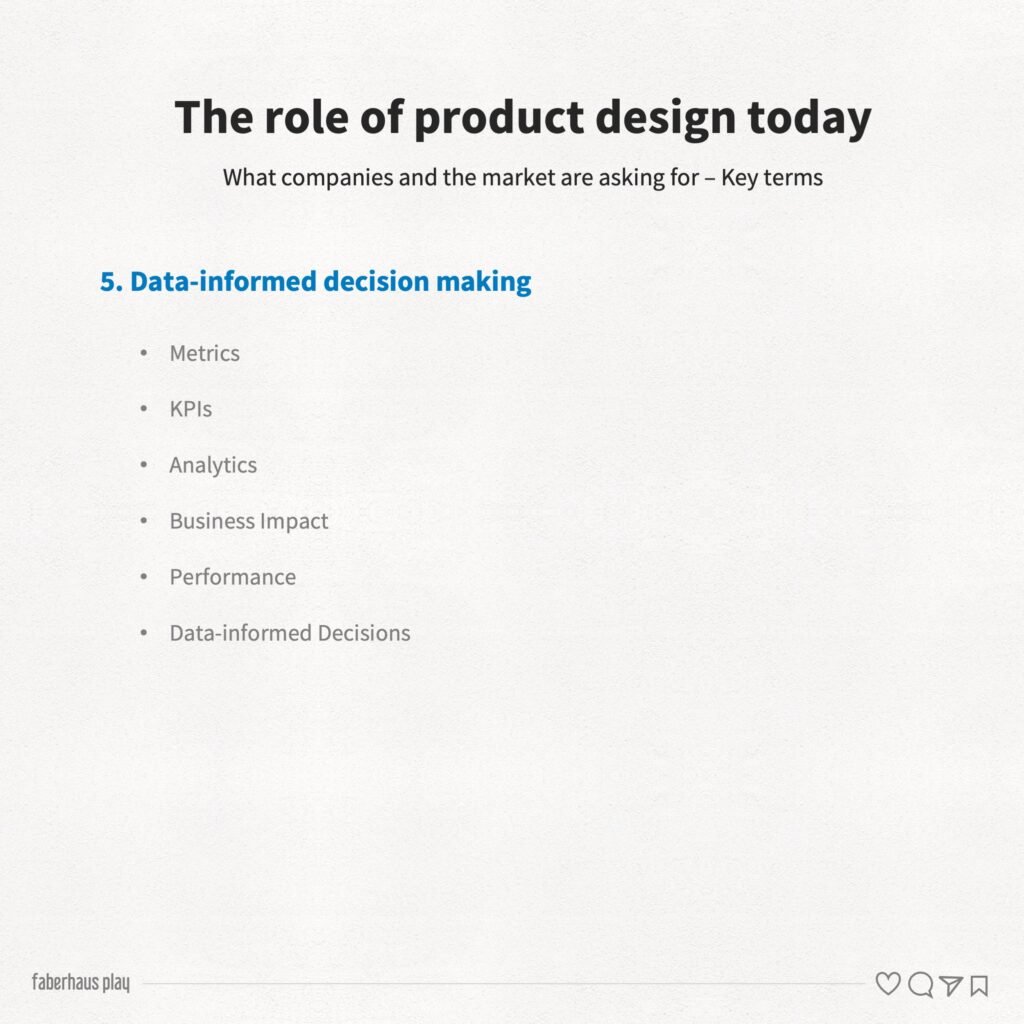
5. Data-informed decision making
Another strong trend is the growing expectation that designers understand data.
Job descriptions frequently referenced:
- Metrics
- KPIs
- Analytics
- Business Impact
- Performance
- Data-informed Decisions
Interestingly, very few mentioned specific analytics platforms.
The expectation isn’t that designers become data analysts.
It’s that they become better decision-makers by combining qualitative research with quantitative evidence.
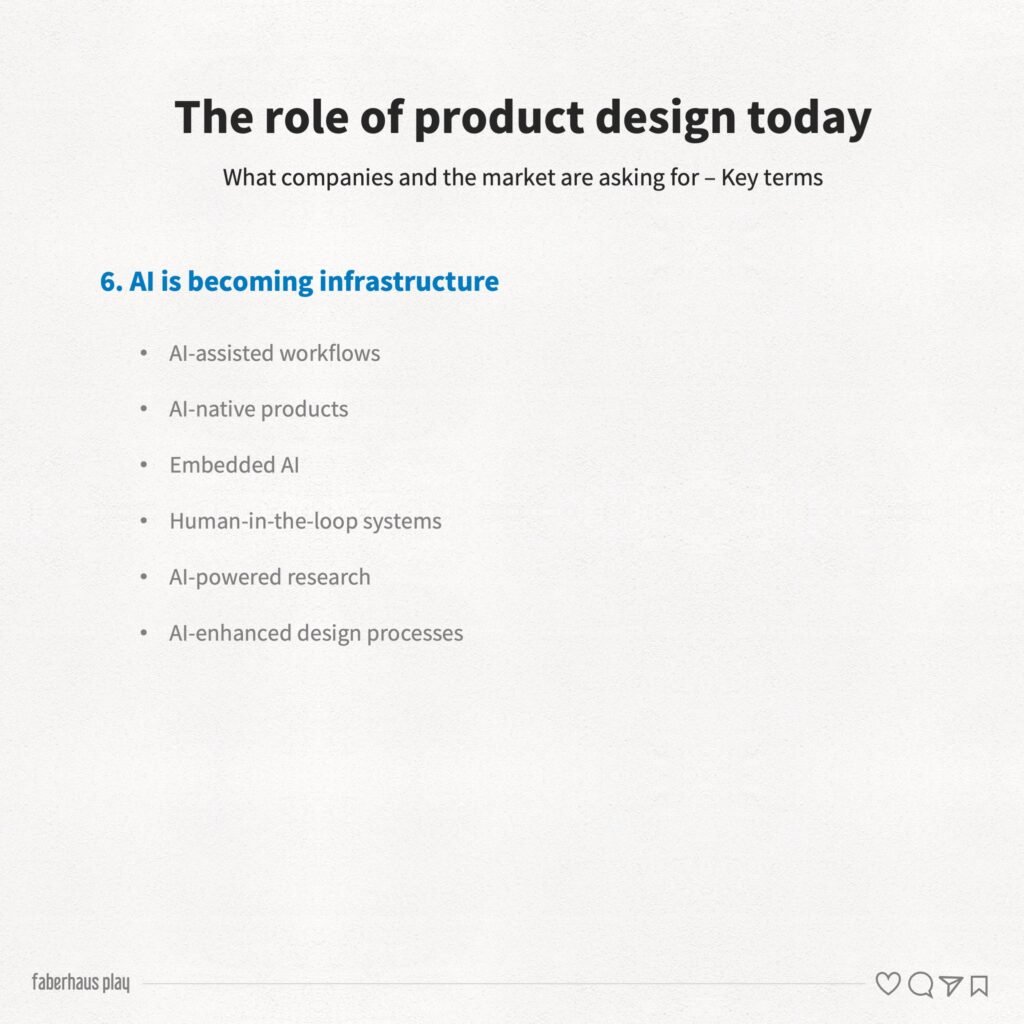
6. AI is becoming infrastructure
Perhaps the most interesting change compared to just a couple of years ago involves artificial intelligence.
In 2023, many job descriptions highlighted:
- Prompt Engineering
- ChatGPT
- Large Language Models
Today, the language has matured.
Companies now talk about:
- AI-assisted workflows
- AI-native products
- Embedded AI
- Human-in-the-loop systems
- AI-powered research
- AI-enhanced design processes
Artificial intelligence itself is no longer the differentiator.
It is becoming part of the product development infrastructure.
The real advantage still belongs to professionals who know how to ask better questions, interpret evidence, make sound decisions, and use AI to accelerate—not replace—that process.
The real shift
The most interesting insight isn’t that these keywords appear frequently.
It’s that they appear together.
If I had to summarize dozens of Product Design job descriptions into a single sentence, it would be this:
Companies are looking for professionals who can understand complex business problems, lead discovery, collaborate across disciplines, make data-informed decisions, influence stakeholders, and use AI to accelerate learning and product development.
Notice how little this description says about designing screens.
It is fundamentally about solving problems.
Designers still articulate interfaces.
But what increasingly distinguishes senior professionals happens long before pixels—and long after delivery.
What this means for your career
This analysis isn’t only useful for understanding the market.
It can also help you rethink how you present your own experience.
If these are the capabilities companies consistently describe in job postings, they should also appear—authentically—in your résumé, LinkedIn profile, portfolio, and case studies.
That doesn’t mean stuffing your profile with keywords.
It means highlighting work you may already be doing but haven’t made visible.
For example, instead of writing:
Designed mobile app interfaces.
You might actually have done much more:
- Led product discovery to understand customer needs.
- Partnered with Product Managers to define hypotheses.
- Facilitated workshops with stakeholders.
- Prioritized solutions based on business impact.
- Validated concepts with customers.
- Measured outcomes after launch.
The work didn’t change.
Only the way it is communicated.
Many Product Designers already contribute to strategy, research, experimentation, analytics, facilitation, and cross-functional collaboration.
Yet those contributions often remain hidden behind generic titles like UX/UI Designer or descriptions focused solely on interface design.
That makes it harder for recruiters—and increasingly for AI-powered hiring systems—to recognize the full scope of a professional’s experience.
Your résumé, LinkedIn profile, and portfolio don’t need to tell your entire career story.
They need to clearly communicate the capabilities the market is looking for—as long as they genuinely reflect the work you’ve done.
Ultimately, developing these skills is only part of the equation.
Making them visible is what helps connect your experience with the opportunities you’re pursuing.
References
This article is based on a qualitative analysis of approximately 50 Product Design job descriptions from companies across multiple industries, including fintech, banking, SaaS, consulting, Big Tech, healthcare, e-commerce, education, and enterprise software.
The goal was not to produce a statistical study of the market, but to identify recurring patterns in the capabilities and responsibilities organizations increasingly seek in Product Designers today.

